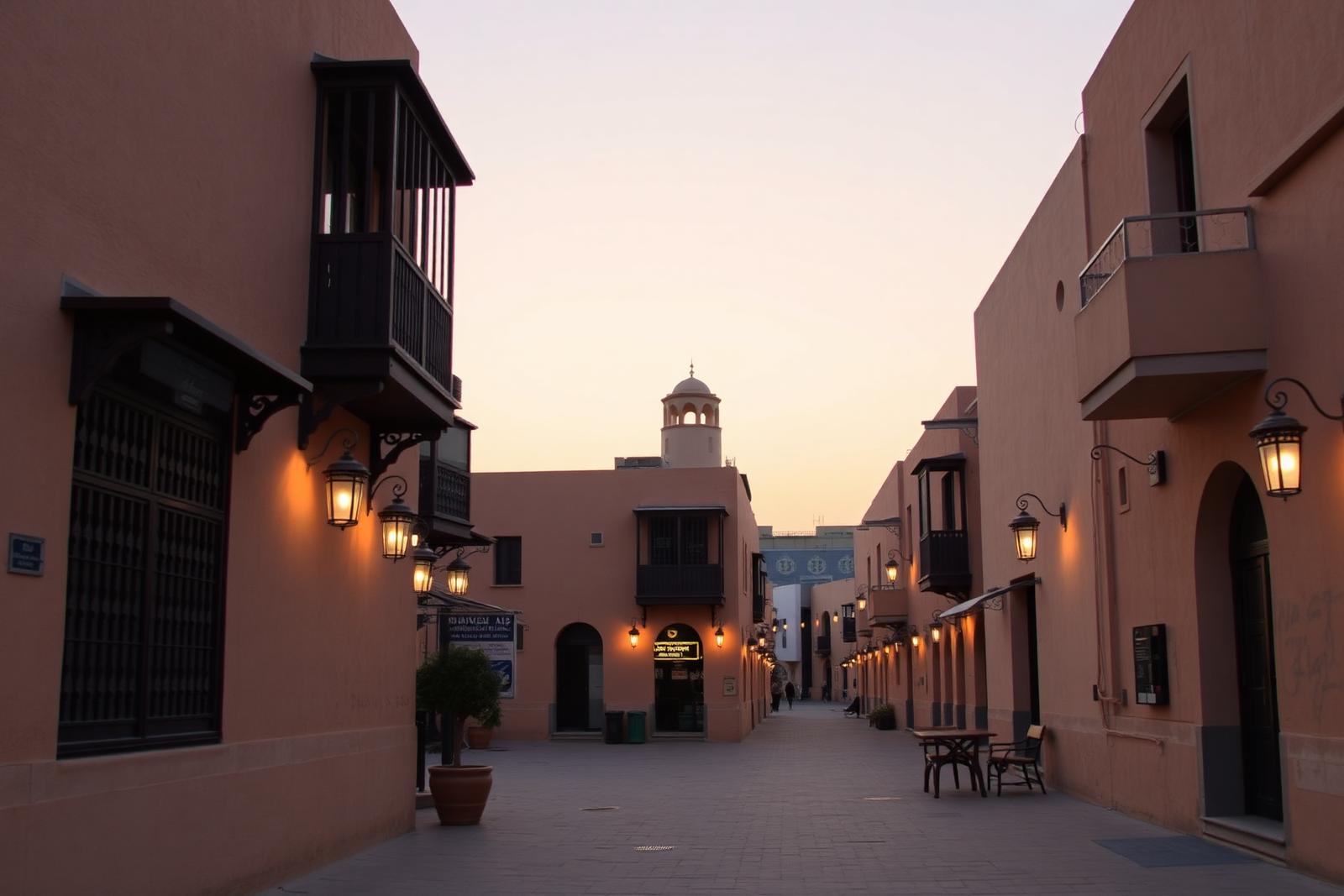
A 1950s city, restored
The Heart of Sharjah is a 25-year, AED 1 billion restoration of the city's pre-oil core — the largest heritage project of its kind in the Gulf. The brief was simple and uncompromising: rebuild the 1950s Sharjah of coral-stone houses, wind towers and shaded sikkas using the original materials and the original techniques, then fill it with museums, galleries, cafés and small hotels.
Walking through it now, you cross courtyards where pearl merchants once stored their seasons' catch and step into rooms now hung with contemporary Emirati art. The mix is deliberate, and it works.
What to see, in order
Start at Souk Al Arsah, the oldest functioning souk in the UAE, for Bedouin silver, antique khanjars and the best karak tea in the quarter. From there, walk to Bait Al Naboodah — the restored home of a pearl-trading family — for the clearest picture of how the wealthy lived a century ago.
Cross the open square to the Sharjah Heritage Museum for context, then the Calligraphy Museum for one of the finest collections of Arabic script anywhere. Finish the loop at the Sharjah Art Foundation's gallery spaces, which host year-round contemporary exhibitions in restored merchant houses.
Eat, sleep, stay late
For lunch, Al Fanar Restaurant serves classical Emirati cuisine — machboos, harees, luqaimat — in a re-created 1960s setting. For dinner, the rooftop at Fen Café & Restaurant overlooks the whole quarter as the lights come on.
If you want to stay overnight, The Chedi Al Bait is built into seven of the restored heritage houses and is one of the most atmospheric hotels in the country. Even if you're not staying, walk through the lobby for the courtyard alone.